


Why Bigger Isn’t Always Better When It Comes to Pianos
When shopping for a piano, one of the most common misconceptions is that “bigger is better.” It’s easy to assume that a larger piano, with its expansive frame and long strings, would automatically produce a better sound. However, as experienced pianists and musicians know, the true quality of a piano goes far beyond just its size. What truly matters is how a piano is designed and constructed, and how the quality of its components contributes to its sound and performance.
The Truth About Piano Size
Many customers, when initially shopping for a piano, are drawn to the size. It seems logical: a grand piano’s grandiose size must yield a more powerful, resonant tone. However, size alone is not a guarantee of superior sound quality or playability. In fact, a smaller piano from a reputable manufacturer can often outperform a larger one from a less experienced maker. So, instead of looking for a piano solely based on its size, it’s crucial to understand the importance of design, craftsmanship, and the quality of materials used in the construction of the instrument. 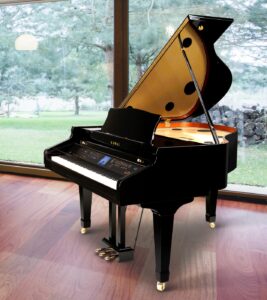
Why Design and Quality Matter More Than Size
A piano’s design is its blueprint. The construction, action mechanism, and how the components work together are what make a piano sing. Even with a smaller body, a well-designed piano can produce a sound that rivals that of a larger, more expensive instrument.
For instance, action – the mechanism that controls how the keys, hammers, and strings interact – is key to playability. A poorly designed action can make even the largest piano feel sluggish or inconsistent, whereas a smaller piano with a finely tuned action can offer superior touch and responsiveness.
Another important factor is tone quality. Pianos are made from a variety of materials, including wood, steel, and felt, and the quality of these materials directly impacts the richness of the sound. Manufacturers who invest in premium woods, carefully selected strings, and high-quality felt pads are more likely to produce pianos that have a fuller, more nuanced sound, even in smaller models.
The Role of Craftsmanship
The craftsmanship of a piano is often more important than its size. Skilled builders can optimize the design of even a smaller piano to ensure that it sounds clear, vibrant, and well-balanced. This attention to detail can make all the difference. A highly skilled artisan can tune a piano’s action and acoustics so that it plays beautifully regardless of whether it’s an upright, baby grand, or even a smaller grand piano.
It’s also worth noting that some larger pianos may not be built with the same care and attention to detail as smaller, premium models. For example, while a large piano can have longer strings and a wider soundboard, if these elements are not properly aligned or crafted from lower-quality materials, the instrument will likely fail to meet the expected sound quality.
Why You Shouldn’t Overlook Smaller Pianos
A smaller piano that has been designed and built with care can be just as impressive as a larger model. The right smaller piano can offer excellent sound, easy playability, and, importantly, the right balance for the space in which it’s placed. Baby grands and uprights are ideal for many spaces – whether it’s a home or studio – because they don’t take up as much room but still deliver stunning sound.
Also, smaller pianos are typically more affordable, making them a more accessible option for those just starting out or those on a tighter budget. They may also be easier to maintain and tune over time, making them a great investment for pianists of all levels.
Choosing the Right Piano for You
When shopping for a piano, focus on quality, not just size. It’s important to evaluate the craftsmanship, consider the reputation of the manufacturer, and pay attention to details like the quality of the wood, the action mechanism, and the overall construction. These are the elements that will make a significant difference in how a piano plays and sounds.
The size of a piano should not be the only factor that determines your choice. Whether you’re a beginner, intermediate, or advanced pianist, you should choose a piano based on its ability to meet your needs and preferences, not just because it looks impressive.


