

How Much Is My Piano Worth?
If you have an older piano at home or are thinking about selling or trading in your current instrument, you may be wondering: how much is my piano worth? Piano values vary considerably. Two instruments of similar age and appearance can have very different market values depending on their brand, model, condition, maintenance history, and current demand.
While online research can provide a rough idea, determining what a piano is actually worth usually requires looking at the instrument itself. Understanding the factors that influence piano value can give you a much better idea of what to expect.
What Determines a Piano’s Value?
A piano’s brand and model are important starting points. Instruments from established manufacturers with strong reputations for craftsmanship and performance tend to attract more interest in the used piano market. However, the name on the fallboard does not determine value by itself.
Age, condition, size, maintenance history, and local demand all matter. A desirable piano that has been poorly maintained may be worth considerably less than a more modest instrument that has received consistent professional care.
Does the Age of a Piano Affect Its Value?
Age can influence piano value, but an older piano is not automatically more valuable. Unlike antiques that may become desirable primarily because of their age or rarity, pianos are working musical instruments. Buyers generally care about how well the piano plays and whether its major components remain in good condition.
A quality piano that has been properly maintained or professionally restored may continue to offer excellent performance many decades after it was built. Conversely, an old piano with extensive wear, structural problems, or years of neglected maintenance may have limited resale value regardless of its appearance or history.
Why Condition Matters So Much
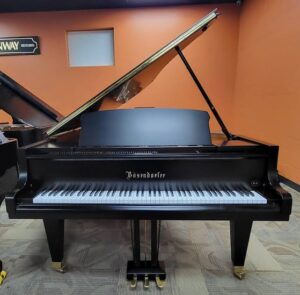
The internal condition of a piano is one of the most important factors in determining its value. An evaluation may consider the soundboard, bridges, strings, tuning pins, hammers, action, pedals, and other components. The piano’s ability to hold a stable tuning is particularly important.
Cosmetic condition matters as well. Scratches, fading, damaged finishes, and cabinet wear can affect what a buyer is willing to pay, but mechanical and structural condition usually deserve greater attention. A beautiful cabinet cannot compensate for an instrument that requires extensive internal work.
Brand, Model & Piano Type
Certain brands and models command higher prices because musicians recognize their quality, sound, construction, or history. Roger’s Piano works with instruments from respected manufacturers such as Yamaha, Bösendorfer, Estonia, Baldwin, Kawai, and other established piano makers.
The type of piano also influences its value. Grand pianos often have higher market values than comparable uprights, but size alone does not make an instrument valuable. A well-maintained upright from a respected manufacturer can be more desirable than a neglected grand piano requiring extensive repairs.
Has the Piano Been Restored?
Professional restoration can significantly change the condition and potential value of an older piano. Depending on the instrument, restoration might involve work on the action, hammers, strings, pinblock, soundboard, finish, or other components.
The quality of that work matters. A professionally restored piano from a desirable manufacturer can be an attractive alternative to purchasing a new instrument. Poor repairs or inappropriate replacement parts, however, do not necessarily increase its value.
What Is the Difference Between Market Value and Replacement Value?
When asking how much a piano is worth, it is important to clarify what type of value you need. Fair market value generally reflects what a willing buyer might reasonably pay for the instrument under current market conditions. This can be useful when selling or purchasing a used piano.
Replacement value serves a different purpose and may be relevant for insurance. It considers what it would cost to replace the piano with an instrument of comparable type, quality, and condition. Because these values answer different questions, the same piano may have different figures depending on the purpose of the appraisal.
Can You Determine Piano Value Online?
The piano’s serial number, manufacturer, model, and photographs can provide useful information and may help establish its approximate age and identity. Online listings for similar instruments can also provide some context, but asking prices should not automatically be treated as actual market values.
A piano contains thousands of components, and many important problems cannot be identified from photographs alone. When an accurate valuation matters, a professional piano appraisal or evaluation provides a much stronger basis for determining value.
Find Out What Your Piano Is Worth at Roger’s Piano
If you are wondering how much your piano is worth, Roger’s Piano in Natick, MA can help you better understand your instrument and your options. Whether you are considering an appraisal, selling a piano, trading it toward another instrument, or simply want to know more about what you own, our experienced team can help evaluate the factors that influence its value.
Roger’s Piano also offers a selection of new and pre-owned instruments, making it easier to explore your options if you are considering an upgrade. Contact us or visit our Natick showroom to learn more about piano evaluations, appraisals, trade-ins, and finding the right instrument for your needs.


