


How to Try a Piano Before You Buy It
To try a piano before buying it, play the same short passages on several instruments, compare how the keys respond, and listen at different volumes. Test the pedals, ask about the piano’s condition, and take notes so you can compare your favorites.
You do not need an advanced repertoire to make the visit worthwhile. A familiar melody, a few chords, or help from a teacher can reveal preferences that specifications and online recordings cannot show you.
Prepare Before Visiting a Piano Showroom
Start with your budget, the space available at home, and how you expect to use the instrument. Tell the showroom team whether you are buying for a beginner, returning to playing, or replacing a piano you already own.
Bring music you know comfortably. Choose something you can play without concentrating entirely on the notes, so you can pay attention to the instrument.
If possible, prepare a gentle passage, a section with chords, and something that uses both lower and higher notes. These do not need to be separate pieces. Different sections of one familiar song may be enough. 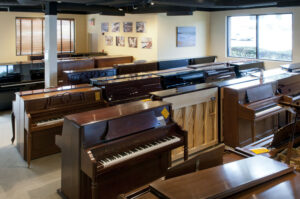
For a digital or silent piano, bring your usual headphones if you have them. Ask ahead whether they will connect directly or require an adapter.
Play the Same Music on Each Piano
Using the same passage makes comparisons more useful. If you play a quiet melody on one piano and a loud chord progression on another, you are changing both the instrument and the test.
Start with a short section at a comfortable volume. Repeat it on another piano while the sound and feel are still fresh in your memory.
Keep your initial comparison manageable. Try a few suitable instruments, identify your favorites, and return to those for a longer session.
Write down the brand and model alongside specific observations. “Easy to control softly” is more helpful later than “nice piano.”
Listen to the Tone Across the Keyboard
A piano that sounds appealing in the middle register may give you a different impression when you explore its bass and treble.
Play lower notes individually and in chords. Move through the middle and upper parts of the keyboard, listening to how the character of the sound changes.
Consider whether the tone suits your preferences. You may enjoy a bright, clear sound or prefer something warmer and rounder. Neither description automatically indicates a better instrument.
Repeat a passage softly and then more strongly. Listen for whether you enjoy the sound at both levels and whether you can bring out a melody without the accompaniment overwhelming it.
Ask someone else to play while you listen from a short distance away. This gives you another perspective, although the showroom’s acoustics will differ from those in your home.
Check How the Keys Respond
Touch describes how the keyboard feels and responds beneath your fingers. Pay attention to whether you can produce the volume and expression you intend.
Try a slow melody, a few repeated notes, and a familiar scale if you know one. Notice whether you can play quietly with control and move comfortably between notes.
A heavier touch is not automatically better, and a lighter touch is not automatically easier to control. The useful question is whether the instrument responds comfortably to your playing.
If a key sticks, returns slowly, or feels noticeably different from neighboring keys, point it out to the showroom team. Ask for an explanation rather than trying to diagnose the cause yourself.
Try the Pedals
Use the sustain pedal with a familiar chord progression. Listen to what happens as you press and release it, and check that you can operate it comfortably from your playing position.
Ask the staff to demonstrate the other pedals. Their functions can differ between piano types and models, particularly the middle pedal.
For digital pianos, ask which pedal functions the model supports and try those you expect to use. If you are still learning, a teacher or showroom specialist can demonstrate what to listen for.
What If You Cannot Play Yet?
You can still take part in choosing your piano.
Ask a staff member to play the same short selection on your shortlisted instruments. Request both soft and louder playing so you can hear more than one aspect of each piano.
Sit at the keyboard yourself afterward. Try individual notes and simple groups of keys. Notice whether the instrument feels comfortable and whether you like its sound.
If you already have a teacher, consider inviting them or asking for guidance before your visit. They can help assess suitability for lessons while you focus on your preferences, budget, and space.
Compare Digital Pianos Using Similar Settings
When comparing digital pianos, begin with their main acoustic piano sounds at similar listening volumes. Ask staff to explain any effects or settings that could influence the comparison.
Try both the built-in speakers and headphones if you plan to use both at home. Explore the controls you will use regularly, such as volume, sound selection, and the metronome.
For a silent or hybrid model, ask for a demonstration of its available playing modes. Test the functions that matter to your routine instead of judging the instrument only by its feature list.
Ask What Is Included Before Deciding
Once you have a favorite, clarify the purchase details. Useful questions include:
- Am I buying this exact instrument or another unit of the same model?
- What preparation or servicing will be completed before delivery?
- Are the bench, delivery, and setup included in the quoted price?
- What warranty applies, and what does it cover?
- For a used piano, what is known about its service history and previous repairs?
- What maintenance should I plan for after purchase?
Trying a used piano helps you judge whether you enjoy playing it, but it does not establish the condition of every internal component. Ask whether an independent piano technician can inspect it before you commit.
How Roger’s Piano Can Help
Roger’s Piano helps buyers find instruments suited to their playing level, preferences, and home. Through our Piano Matching service, we discuss what you want from a piano, including its tone, touch, and appearance.
Contact Roger’s Piano to arrange a showroom visit and discuss the instruments you would like to compare. Bring your questions and familiar music so you can explore your options with a clear idea of what matters to you.


