


How Much Space Do You Need for a Grand Piano?
A grand piano can transform a room both visually and musically, but before purchasing one, it’s important to understand how much space you actually need. Many buyers focus only on whether the piano physically fits, but room size also affects sound quality, comfort, and the overall playing experience. Choosing the right piano for your space helps ensure that the instrument performs beautifully without overwhelming the room.
Understanding Grand Piano Sizes
Grand pianos come in several size categories, each designed for different environments. Baby grand pianos are typically the most compact, usually measuring between five and five and a half feet in length. Medium grand and parlor grand pianos range from about six to seven feet, while concert grands can exceed nine feet. The larger the piano, the longer the strings and soundboard, which creates greater tonal depth and projection.
Brands like Yamaha, Estonia, and Bösendorfer offer grand pianos in multiple sizes, allowing buyers to match the instrument to both their musical goals and available space.
Room Dimensions Matter
A grand piano should not only fit inside the room but also have enough surrounding space to sound balanced and comfortable. In smaller rooms, oversized pianos can produce excessive volume and reflections, making the tone feel harsh or muddy. On the other hand, a piano that is too small for a large room may sound weak and lack presence.
As a general guideline, baby grands work well in living rooms, apartments, and smaller music studios, while larger grands are better suited for open floor plans, recital spaces, or dedicated music rooms. Ceiling height, flooring, and wall materials also influence acoustics and should be considered when choosing a piano size. 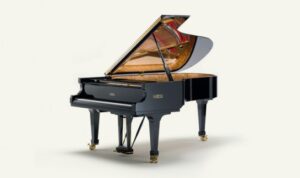
Allow Space Around the Piano
Many first-time buyers underestimate how much clearance a grand piano needs. Beyond the piano itself, you’ll need space for the bench, comfortable movement around the instrument, and room to fully open the lid if desired. A crowded setup not only affects appearance but can also limit sound projection and accessibility.
Ideally, there should be several feet of open space around the curve and tail of the piano. This helps the sound develop naturally and allows the instrument to become a visual centerpiece rather than feeling squeezed into the room.
Acoustics and Flooring Considerations
The materials in your room significantly affect how a grand piano sounds. Hardwood floors and large windows create brighter reflections, while carpets, rugs, and upholstered furniture absorb sound and soften the tone. Some rooms may benefit from acoustic adjustments depending on the piano size.
Floor strength is another consideration, especially for larger grands. While most residential floors can support a baby grand without issue, heavier concert or semi-concert grands may require additional structural evaluation in older homes.
Choosing the Right Grand Piano for Your Home
The ideal grand piano balances sound quality, aesthetics, and practicality. A smaller room doesn’t necessarily mean you can’t own a grand piano, but it does mean choosing carefully. Many buyers discover that a high-quality baby grand from brands like Yamaha or Estonia provides more than enough tonal richness for home use while fitting comfortably within the space.
At Roger’s Piano, we help customers compare grand piano sizes in person so they can better understand how each model feels and sounds. Seeing the instrument in a showroom environment often makes the decision much easier.
Explore Grand Pianos at Roger’s Piano
At Roger’s Piano in Natick, MA, we offer a carefully selected range of grand pianos from respected manufacturers including Yamaha, Estonia, Bösendorfer, and more. Whether you’re furnishing a small living room or building a dedicated music space, our team can help you choose the right piano size for your home and musical goals.
Visit our showroom or contact Roger’s Piano today to explore grand pianos and find the perfect fit for your space.


